
Shoppers trust people more than adverts. A short video from a creator showing how a product works can do what a perfect listing cannot: show it in real life, from someone the viewer already follows. Amazon influencer marketing puts that trust to work, sending engaged shoppers straight to your product pages.
Amazon now gives brands several ways to work with creators, both inside Amazon and on social media. This guide explains the main options, how to measure results and how to run a campaign that is worth the effort.
Why Influencer Marketing Works for Amazon Brands
Influencer content helps at the stage where many shoppers hesitate: deciding whether a product is right for them. Creators can show size, texture, set-up and real use in a way that static images cannot.
For Amazon sellers, there are three main benefits:
- New audiences: creators introduce your brand to shoppers who may not have searched for it
- Social proof: real demonstrations build confidence before the click
- Measurable traffic: with the right links and tools, you can see which creators drive sales
The key is choosing the right route for your brand and tracking every campaign.
What Is the Amazon Influencer Program?
The Amazon Influencer Program is an extension of Amazon’s affiliate programme for creators with a social media following. Approved influencers get their own storefront on Amazon, where they can recommend products in lists, photos and videos. Their shoppable videos can also appear on Amazon product pages and in search results.
Influencers earn commission on qualifying purchases made through their links and storefronts. For brands, this means creators may already be reviewing products in your category. A good influencer video on your product page can help shoppers understand the product without leaving Amazon.
Amazon Creator Connections Explained
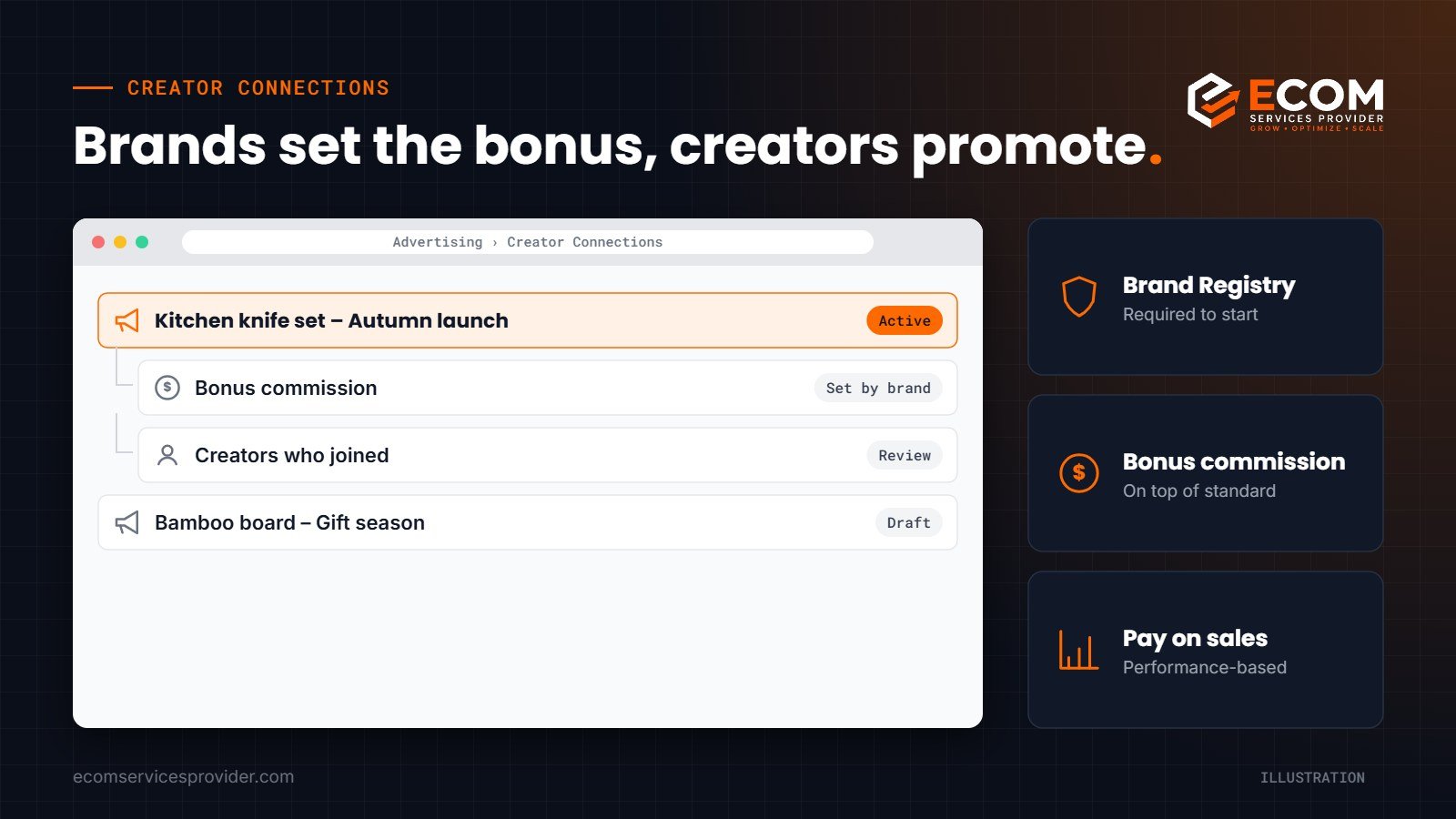
Amazon Creator Connections is the tool that lets brands work with creators directly. Brands create campaigns for selected products, and creators in the Amazon Influencer Program can choose to promote them in return for a bonus commission on top of their standard commission.
Key points for brands:
- It requires Amazon Brand Registry
- Sellers manage campaigns from the Advertising area of Seller Central
- It is performance-based: you pay bonus commission on sales the campaign drives
- Amazon has added options for flat-fee sponsored content in some marketplaces
Availability differs by marketplace and has been widest in the US, so check whether Creator Connections appears in your Seller Central account before planning around it.

External Creators: Tracking with Amazon Attribution
Many brands also work with creators directly on Instagram, TikTok or YouTube. In this case, measurement matters most. Amazon Attribution lets brand owners create tracking links for each creator or post, showing clicks, detail page views and sales that came from that traffic.
Brand Registry members can also benefit from the Brand Referral Bonus. Amazon says the bonus averages around 10% of qualifying sales that come from non-Amazon marketing measured with Attribution tags. Our guide on how to track social media traffic to Amazon explains how to set up these links step by step.
Which Option Is Right for Your Brand?
Each route suits a different stage of growth, and many brands use more than one.
- Creator Connections suits brands that want a performance-based model inside Amazon, paying only when sales happen
- Direct partnerships with social creators suit brands that want more control over the content, timing and message
- Influencer Program content on your product pages suits brands that want more video and real-life demonstrations without producing it all themselves
If you are new to Amazon influencer marketing, start small. Run one campaign for one hero product with a handful of well-matched creators, measure the results, then scale what works. Smaller creators with loyal, engaged audiences often deliver better value than one large name.
How to Run an Amazon Influencer Marketing Campaign
A structured approach saves budget and makes results easier to compare.
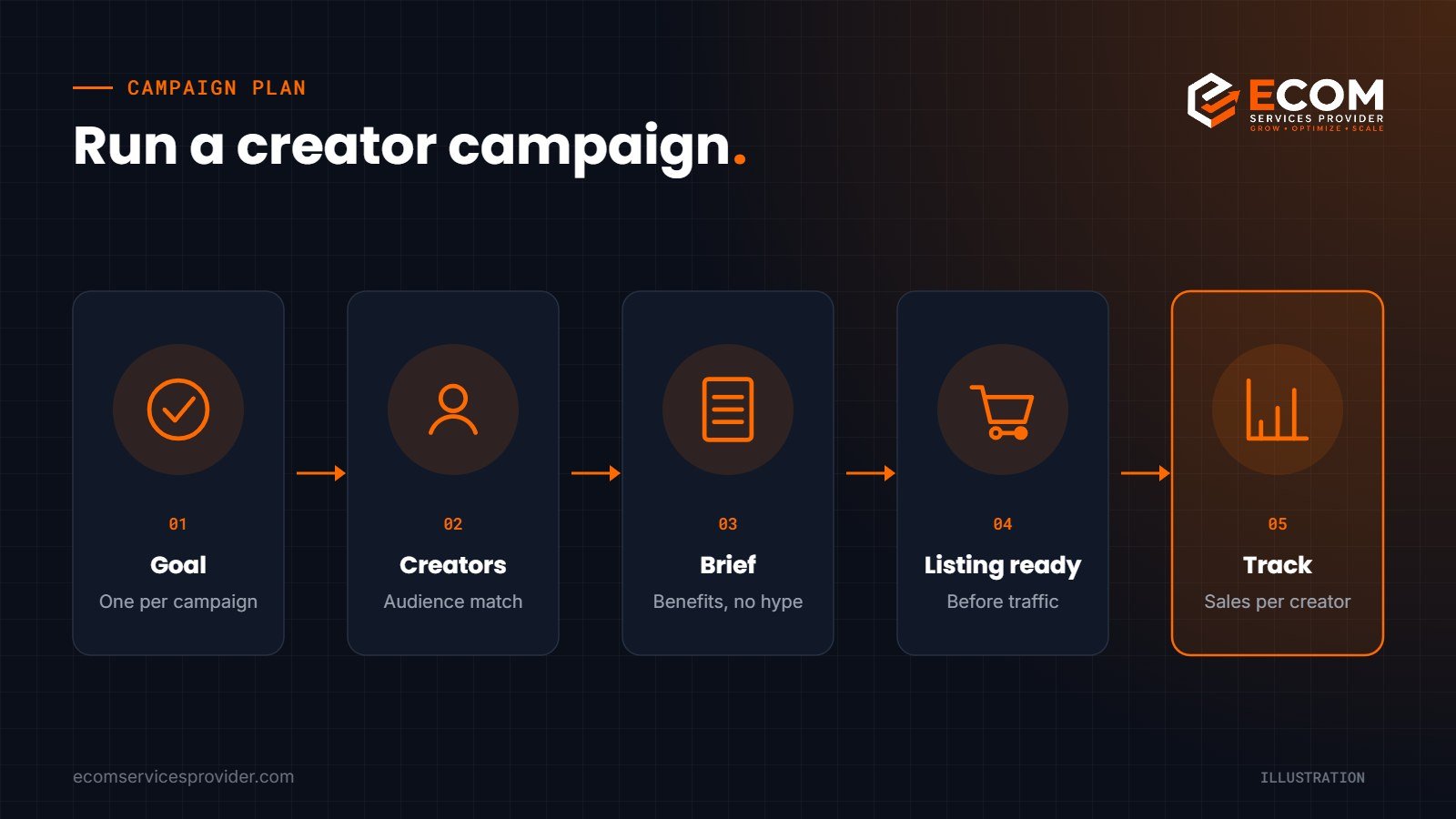
1. Set one clear goal
Decide whether the campaign is for a new launch, a seasonal push or steady sales of a hero product. One goal per campaign keeps measurement simple.
2. Choose the right creators
Look for creators whose audience matches your customer, not just those with the largest following. Review their past content for quality, honesty and genuine engagement in the comments.
3. Write a short, clear brief
Explain the product’s key benefits, the main customer questions and any claims to avoid. Leave room for the creator’s own style, as audiences can tell when content is over-scripted.
4. Make sure your listing is ready
Influencer traffic is wasted if the product page does not convert. Check your images, bullet points, A+ Content and reviews before the campaign goes live.
5. Track and compare results
Use a separate Attribution tag for each creator and post, or the reporting in Creator Connections. Compare clicks, conversion and sales, then put more budget behind the creators who perform.
6. Reuse the best content
With the creator’s permission, good content can work harder after the campaign ends. Short demonstrations can support your product video, Brand Store and social channels. Agree usage rights in writing before you reuse anything, and check that each placement follows Amazon’s content guidelines.
Mistakes to Avoid
- Choosing creators by follower count alone
- Sending traffic without tracking links
- Running campaigns to listings with weak content or few reviews
- Asking for exaggerated or unapproved claims
- Forgetting disclosure: advertising rules in the UK and US require paid promotions to be clearly labelled as ads
How We Do It at ECOM Services Provider
Our social media marketing team plans influencer campaigns around each brand’s goals. We start by checking that the target listings are ready, then shortlist creators whose audiences and content match the brand’s customers. We prepare a clear brief with key benefits and claims to avoid, and set up a separate tracking link for every creator.
During the campaign, we review traffic and sales by creator and adjust the plan based on what the data shows. Where a brand is eligible, we also help set up Creator Connections campaigns and connect the results to the brand’s wider Amazon PPC management so paid and creator traffic work together.
Frequently Asked Questions
How do I find influencers for my Amazon products?
You can use Creator Connections where it is available, or search social platforms for creators in your niche whose audience matches your customers.
Do I need Brand Registry for influencer marketing on Amazon?
Brand Registry is required for Creator Connections, Amazon Attribution and the Brand Referral Bonus. You can still work with creators without it, but tracking is much harder.
How do Amazon influencers get paid?
Influencers earn commission on qualifying purchases through their links and storefronts. Brands can add a bonus commission through Creator Connections or pay creators directly.
Is Amazon Posts still available for brands?
No. Amazon discontinued Posts in 2025, so brands now rely on creator content, video and their Brand Store for visual storytelling.
Start Your Influencer Campaign
Amazon influencer marketing works best when you choose the right creators, prepare your listings and track every click to a sale. ECOM Services Provider has 8+ years of experience and 768+ completed projects helping brands grow on and off Amazon. Book a free consultation to plan your first creator campaign.