Marketplaces bring traffic, but your own website only gets visitors if people can find it. eCommerce SEO is how product and category pages earn free, consistent traffic from Google, and product pages are where that traffic turns into sales. The good news is that Google publishes detailed guidance for eCommerce sites, and most of what works comes down to clear, helpful pages built on a sound structure.
This guide covers the essentials of optimising product pages, based on Google’s own best practices for eCommerce sites and the approach we use with clients.
Start With Keyword Research
Every product page should target a specific search intent. Research the terms shoppers use for each product: the product type, key attributes such as material or size, and use cases. Choose one primary keyword per page and a handful of closely related terms. Avoid targeting the same keyword on several pages, because they end up competing with each other.
If you also sell on Amazon, your Amazon keyword research is a valuable starting point. The language shoppers use on Amazon often overlaps with what they type into Google.
Write a Title and Meta Description That Earn the Click
The page title is one of the clearest signals of what a page is about, and it is often what shoppers see in search results. Include the primary keyword naturally, keep it readable, and add your brand at the end if space allows. The meta description will not directly change rankings, but a clear, specific summary can improve the number of people who click.
Write Unique, Helpful Product Descriptions
Copying manufacturer descriptions word for word means your page looks the same as every other site selling that product. Write original descriptions that explain what the product does, who it is for, what makes it different and how to use it. Use headings and short paragraphs so the page is easy to scan, and answer the questions buyers ask before purchasing.
Use Structured Data
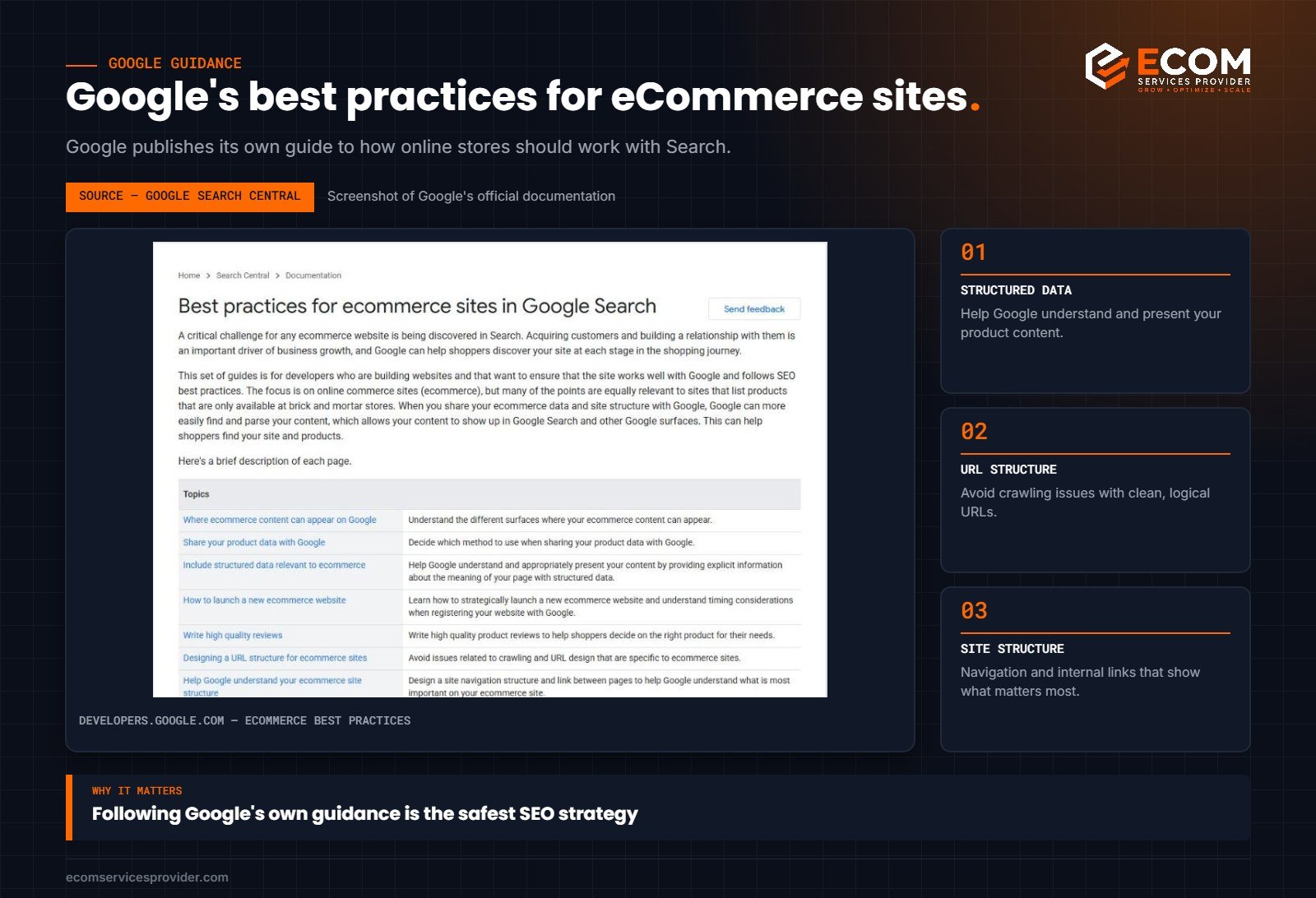
Structured data is code that describes your product to search engines in a standard format: name, price, availability, reviews and more. Google’s eCommerce guidance highlights structured data as a way to help Google understand and present your content, and it can make product pages eligible for richer search results. Product, Offer and Review markup are the usual starting points.
Build a Clear Site Structure
Google recommends a navigation structure and internal linking that help it understand which pages matter most. In practice that means:
- Logical categories and subcategories
- Clear, readable URLs that reflect the structure
- Links from category pages to products, and between related products
- Breadcrumbs so both visitors and search engines know where a page sits
Optimise Images
Images matter for both shoppers and search. Use descriptive file names and alt text that explain what each image shows, compress files so pages load quickly, and use modern formats where possible. Multiple images from different angles help shoppers and give search engines more context.
Make Pages Fast and Mobile-Friendly
Most shoppers browse on mobile, and slow pages lose them. Compress images, remove unnecessary scripts and plugins, and test pages on a phone connection. A page that loads quickly and works well on a small screen supports both rankings and conversions.
Handle Out-of-Stock and Discontinued Products Carefully
Do not simply delete product pages that have built search visibility. If a product is temporarily unavailable, keep the page and mark it out of stock. If it is discontinued for good, point visitors to the closest alternative so the value of that page is not lost.
Encourage Genuine Reviews
High-quality reviews help shoppers decide and add useful, unique content to product pages. Google publishes guidance on writing helpful reviews, and genuine customer feedback should always be collected honestly, never invented or incentivised in ways that break platform rules.
Category Pages Matter Too
Product pages target specific searches, but category pages often rank for broader terms such as a product type in a particular material or style. Give each category page a short, useful introduction, a clear heading that reflects the search term, and filters that help shoppers narrow down products. Avoid creating many near-identical category pages that compete with each other.
Measuring SEO Progress
Google Search Console is free and shows how your pages appear in search: which queries bring impressions and clicks, which pages are indexed and whether Google has found technical problems. Track:
- Impressions and clicks for your target keywords
- Average position for key pages
- Indexing status and any reported errors
- Conversions from organic visitors in your analytics
Review these monthly. Pages with high impressions but few clicks often need better titles and descriptions, while pages with low impressions may need stronger content or internal links.
How We Do It at ECOM Services Provider
We start every SEO project with a keyword map: one row per page, with its primary keyword, related terms and search intent. That map drives page titles, headings, descriptions and internal links. Then we check structure, speed and mobile layout, and fix technical issues before writing new content, so that every improvement has a solid foundation.
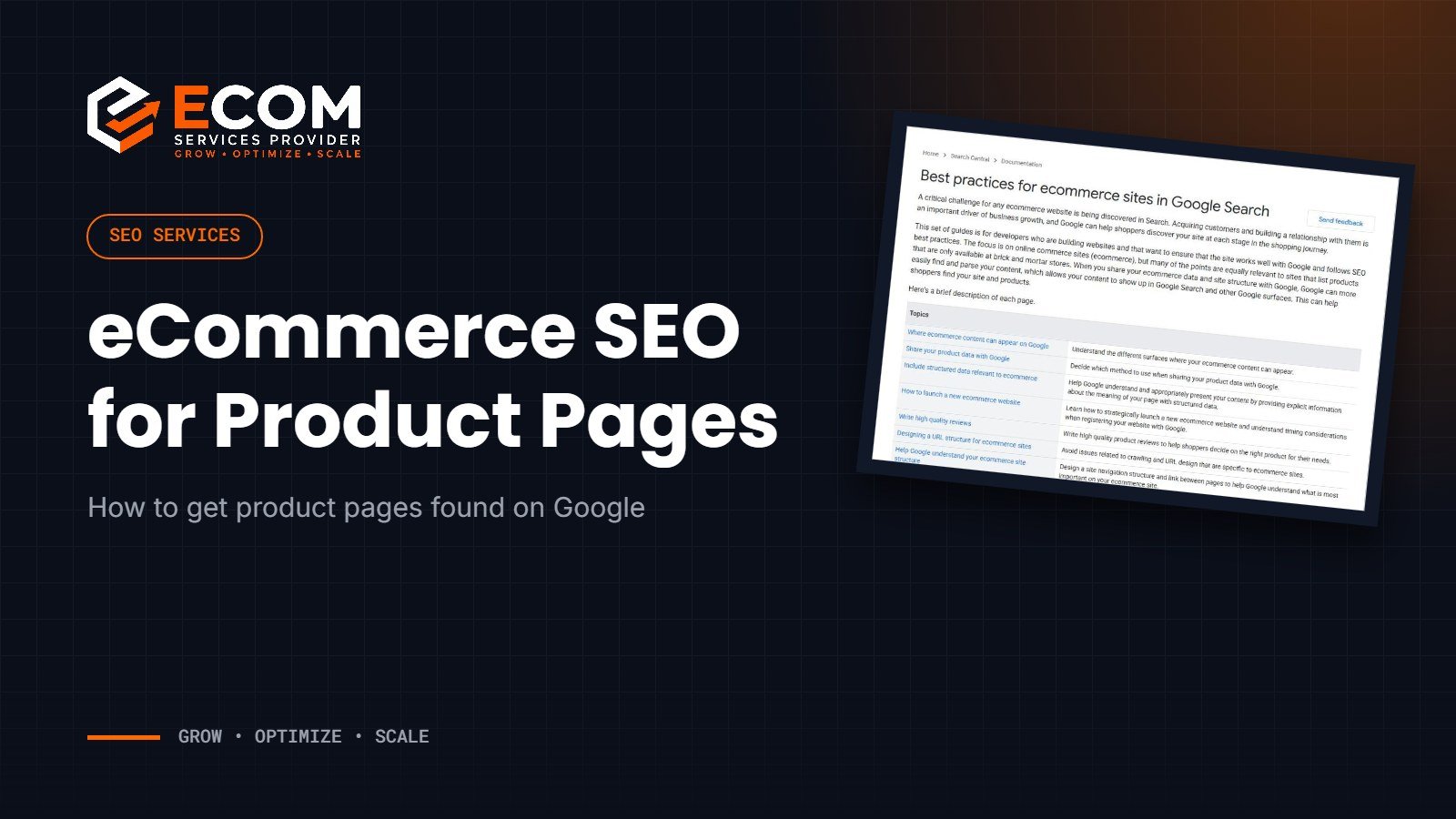
For Google’s full guidance, see Best practices for ecommerce sites in Google Search.
Quick eCommerce SEO Checklist
- One primary keyword per page, with no two pages targeting the same term
- Unique title, meta description and H1 for every product and category page
- Original product descriptions that answer buyer questions
- Product structured data in place and free of errors
- Clean URLs, breadcrumbs and internal links between related pages
- Descriptive image file names and alt text, with compressed files
- Pages tested for speed and mobile usability
- Search Console set up and reviewed monthly
Frequently Asked Questions
How long does eCommerce SEO take to show results?
SEO is a long-term channel. Technical fixes and better titles can help within weeks, while competitive keywords often take several months of consistent work.
Is SEO worth it if I already sell on Amazon?
Yes. Your own website gives you traffic and customer relationships you control, and it reduces reliance on a single marketplace.
Do I need structured data on every product page?
It is strongly recommended for product pages. It helps search engines understand price, availability and reviews, and can make pages eligible for richer results.
Should I use the manufacturer’s product description?
It is better to write your own. Unique descriptions help your pages stand out from other sites selling the same product.
Want More Visitors From Google?
ECOM Services Provider has 8+ years of eCommerce experience and has completed 768+ projects for brands worldwide. Our SEO services cover keyword mapping, on-page optimisation and technical fixes, and our eCommerce website design team builds sites with SEO in mind from day one. Book a free consultation to talk through your website.